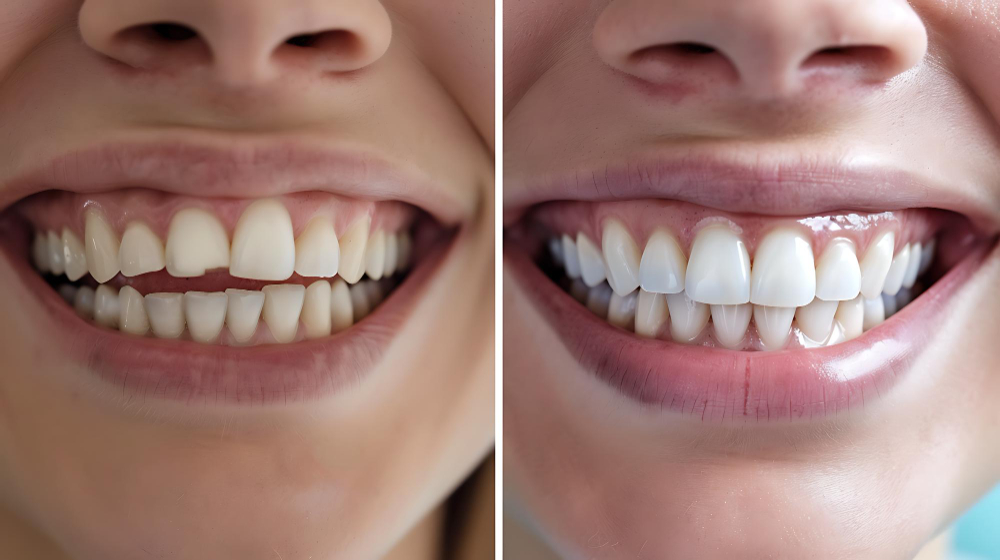
What Is Smile Designing?
Smile designing is a set of cosmetic dental procedures that help improve your smile. Dentists use this approach to change the look of your teeth, gums, and lips. As a result, many people feel more confident about their appearance. According to the American Dental Association, smile designing can include several treatments. These treatments are planned to fit your unique needs and goals.
Common Reasons People Seek Smile Designing
Many people want to improve their smile for different reasons. For example, some may feel unhappy with the color or shape of their teeth. Others may have gaps, chips, or uneven teeth. In addition, some people want to fix old dental work or improve their gum line. Here are some common reasons for choosing smile designing:
Key Procedures Involved in Smile Designing
Smile designing often includes several cosmetic dental procedures. Each treatment is chosen based on your needs. For instance, your dentist may suggest one or more of the following:
Because each smile is unique, your dentist will create a plan just for you.
Benefits and Potential Risks
Smile designing offers many benefits. First, it can boost your self-esteem. Second, it may improve how you speak and chew. Third, it can help keep your mouth healthy by fixing dental issues. However, like any dental work, there are some risks. For example, you may feel tooth sensitivity after certain treatments. In rare cases, gums may become sore or swollen. Although most people have no problems, it is important to talk with your dentist about any concerns.
How to Prepare for a Smile Designing Consultation
Before your first visit, it helps to think about your goals. For instance, you can make a list of what you want to change about your smile. Also, gather any dental records or photos you have. During the consultation, your dentist will:
Because every smile is different, your dentist will suggest a plan that fits you best.
Aftercare and Maintenance Tips
After your smile makeover, you will want to keep your new smile healthy. Therefore, follow these tips:
With good care, your smile designing results can last for many years.
Frequently Asked Questions About Smile Designing
In summary, smile designing can help you achieve the smile you want. If you are thinking about improving your smile, consult Dr Tanuj Verma to learn if smile designing is right for you.